
For experienced aesthetic providers, the discussion around lasers in 2026 is no longer about “does it work?” but how precisely, how predictably, and how reproducibly it works across tissue layers. The industry shift is clear: single-purpose, single-wavelength systems are being replaced by multi-depth, protocol-driven platforms that align with regenerative treatment planning.
EndoOne is designed for this next phase. Its dual-wavelength diode architecture allows clinicians to modulate thermal effects at different tissue depths, enabling collagen remodeling, tissue contraction, and selective adipose interaction within a unified clinical workflow.

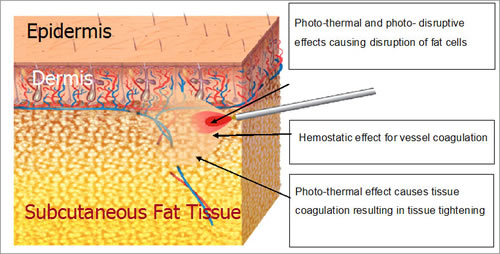
Traditional laser platforms typically target one chromophore or depth profile. While effective in isolation, this approach introduces several clinical constraints:
As providers increasingly adopt stacked and staged protocols, the inefficiency of single-wavelength solutions becomes evident.
EndoOne integrates two diode wavelengths with distinct absorption characteristics, allowing differential interaction with:
This enables controlled thermal gradients rather than uniform heating, which is critical for inducing collagen contraction while minimizing surface trauma.
From a biological standpoint, this approach supports:
From a clinical perspective, EndoOne’s value lies in its ability to influence skin architecture, not just skin appearance.
Key tissue effects include:
This makes it particularly suitable for patients presenting with early-to-moderate laxity, where surgery would be excessive and injectables alone insufficient.
In 2026, high-performing practices are shifting from session-based sales to structured clinical pathways. EndoOne is typically positioned as an activation modality within these pathways.
A common protocol logic:
This sequencing improves tissue receptivity and enhances the longevity of results.
EndoOne protocols can be adapted across multiple anatomical regions, including:
The ability to treat both face and body with the same platform simplifies device strategy while expanding clinical indications.
Because EndoOne relies on controlled, non-ablative thermal delivery, the inflammatory response is moderated compared to aggressive resurfacing technologies.
Clinically, this translates to:
This safety-to-efficacy balance is central to modern anti-aging practice, particularly for working professionals and repeat patients.
From a business and workflow standpoint, EndoOne offers:
These factors directly impact scalability, consistency, and profitability.
Dual-wavelength laser treatment should be viewed as a biological trigger, not a standalone endpoint. By improving tissue perfusion, collagen signaling, and matrix responsiveness, EndoOne prepares the skin for enhanced response to regenerative and biostimulatory strategies.
This positioning aligns with the broader industry move toward technology-assisted regeneration rather than volume replacement.
For experienced providers, the appeal of dual-wavelength platforms is not novelty, but control. Control over depth, tissue response, treatment sequencing, and outcomes.
As anti-aging protocols continue to evolve in 2026, technologies that respect tissue biology while delivering measurable structural change will define the new standard of care. EndoOne fits squarely within that framework.